
What’s hot in 2026?
With every new year comes a fresh set of travel trends, along with subtle shifts in how we see clients travelling (and of course planning) their trips. If 2025 was the year of renewed momentum, 2026 is definitely shaping up to be one of considered travel, with trips that feel well-judged and paced. That could mean taking things slower and building in time to soak up every last ounce of a destination; travelling in less popular shoulder or green season times; and curating experiences that feel genuinely authentic (and aren’t just for the photos).
As travel specialists ourselves, we always find trends useful. They offer a framework for shaping itineraries that feel current, and for packaging those itineraries in a way that clients can immediately understand and get excited about
Below are the travel shifts we’re seeing for 2026, plus practical ways to translate each one into sellable trips using what you already have in Waybird.
Space becomes part of the experience
In 2025, it became clear that many clients were becoming increasingly sensitive to how a place feels and not just how it looks in photos. The best trips in 2026 are the ones that give clients room to breathe and really get under the skin of a destination – think travel designed around the shoulder or green season, trips framed around landscapes, wildlife cycles, festivals and weather patterns, and building in time to breathe.
How can Waybird help?
- The same destinations can feel completely different depending on the time of year, routing, and where you choose to base your clients. Using Waybird, build two versions of the same trip – one during the classic season and one in the shoulder or green season – and help your clients really understand the differences.
- You could also showcase a third option that slows things down even more, perhaps pairing an iconic stop with a second region that feels more off-the-beaten-track, or slowing things down with two bases instead of four, with longer stays and less logistics taking up time.
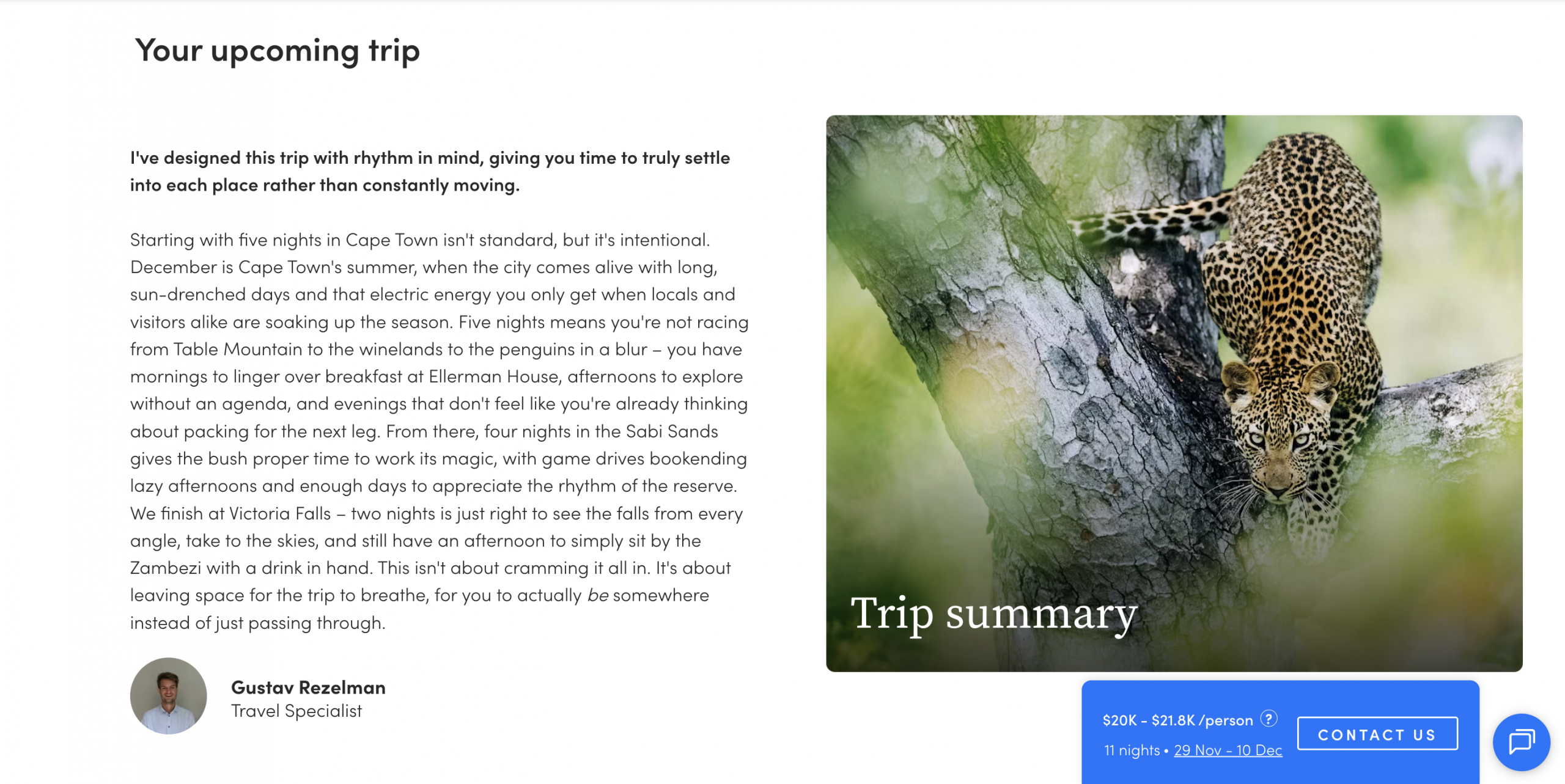
- Use the additional content sections to craft a paragraph about the rhythm of the trip and show clients you’ve thought about the pace of their trip and why you’ve chosen what you have.
- Leave intentional whitespace in the day-by-day itinerary, showing clients that there is time to relax, breathe – and also to spend longer doing something they love.
Family travel is evolving beyond just “kid-friendly”
Families are increasingly travelling in more creative – and larger! – groups: grandparents with grandchildren, blended and multigenerational families, adult kids joining parents, and friends who are basically family.
At the same time, families with older kids and teens are looking for trips that feel grown-up, and not simply filled with the traditional ‘child-friendly’ activities. We all know that multi-gen travel can prove tricky to organise. How do you even begin to satisfy everyone from age 7 to 70?! The opportunity here is to build itineraries that have space for everyone: shared moments that feel special but also enough flexibility so that different energy levels don’t have to compromise.
How can Waybird help?
- Use the itinerary-builder to present different activity options for each day, for example, experiences that can be done together, free time, and optional add-ons.
- In the same vein, offer different ‘levels’ of activities, for example a short easy bush walk one morning, but a longer, more advanced walk the next.
- Build itineraries with different accommodation options. Perhaps your client thinks that an exclusive-use villa or lodge would be too expensive, but the pricing (and the photos!) might show them otherwise.
- Store family-proof copy blocks in your content library whenever you come across helpful information. This could include rooming logic and configurations, flexible activities and age limits, and even just unique and one-off activities.
Night skies and after-dark experiences
There’s something incredibly humbling about being outside at night in the right landscape. Perhaps because it pulls people out of their usual rhythm — away from screens and schedules and routines — and replaces it with scale. Even the simplest setting (a blanket, a warm drink and a guide pointing out constellations) becomes memorable because it’s so far from everyday life.
For many clients, it ends up being the moment they talk about long after the trip. When designing itineraries in 2026, this means stargazing, desert skies, nocturnal wildlife, evening boat trips, fireside storytelling and detailed astronomy sessions.
How Waybird can help
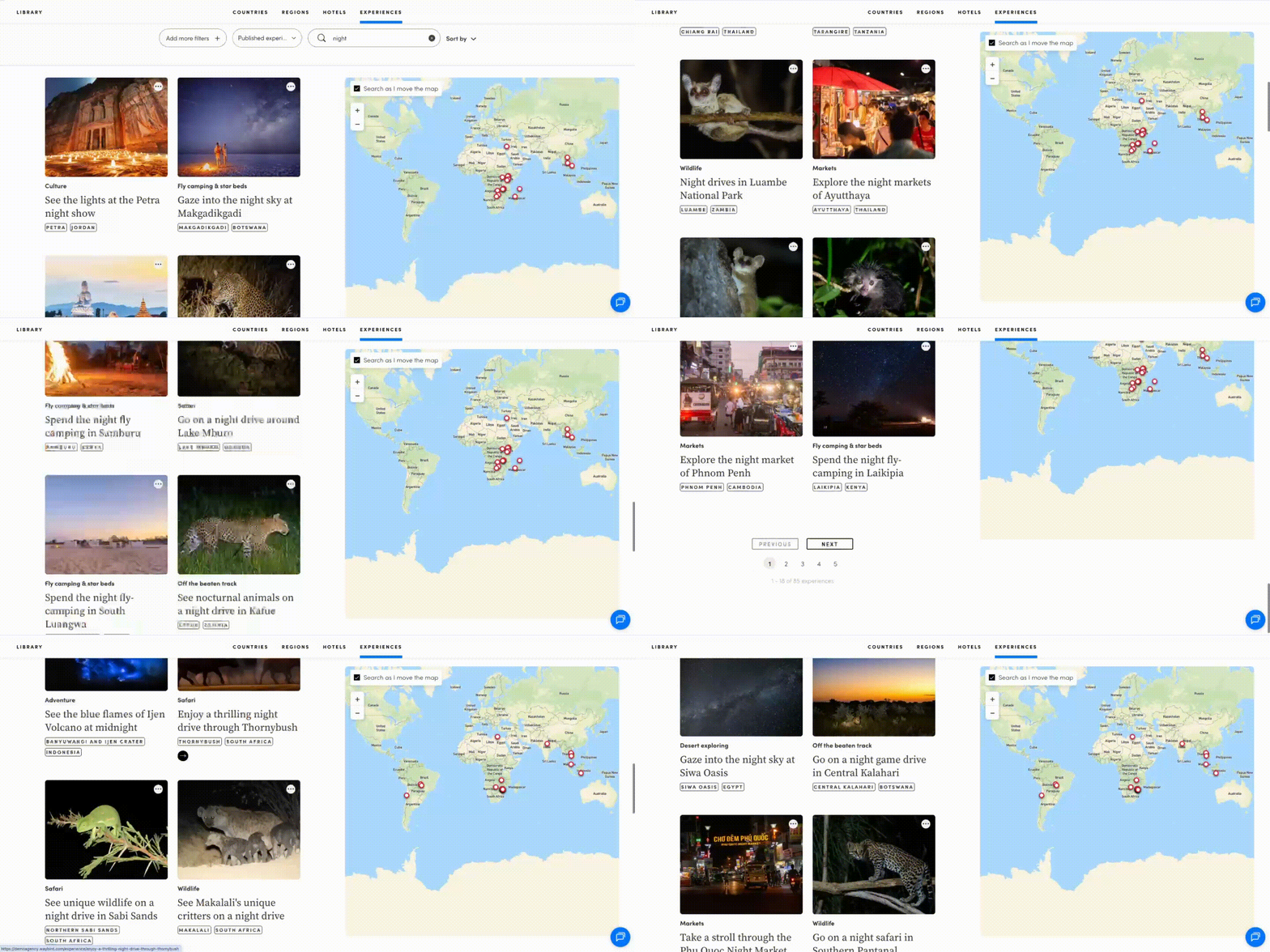
- Write one strong paragraph for each of your hero night-sky experiences and reuse it across proposals to save time when creating new itineraries.
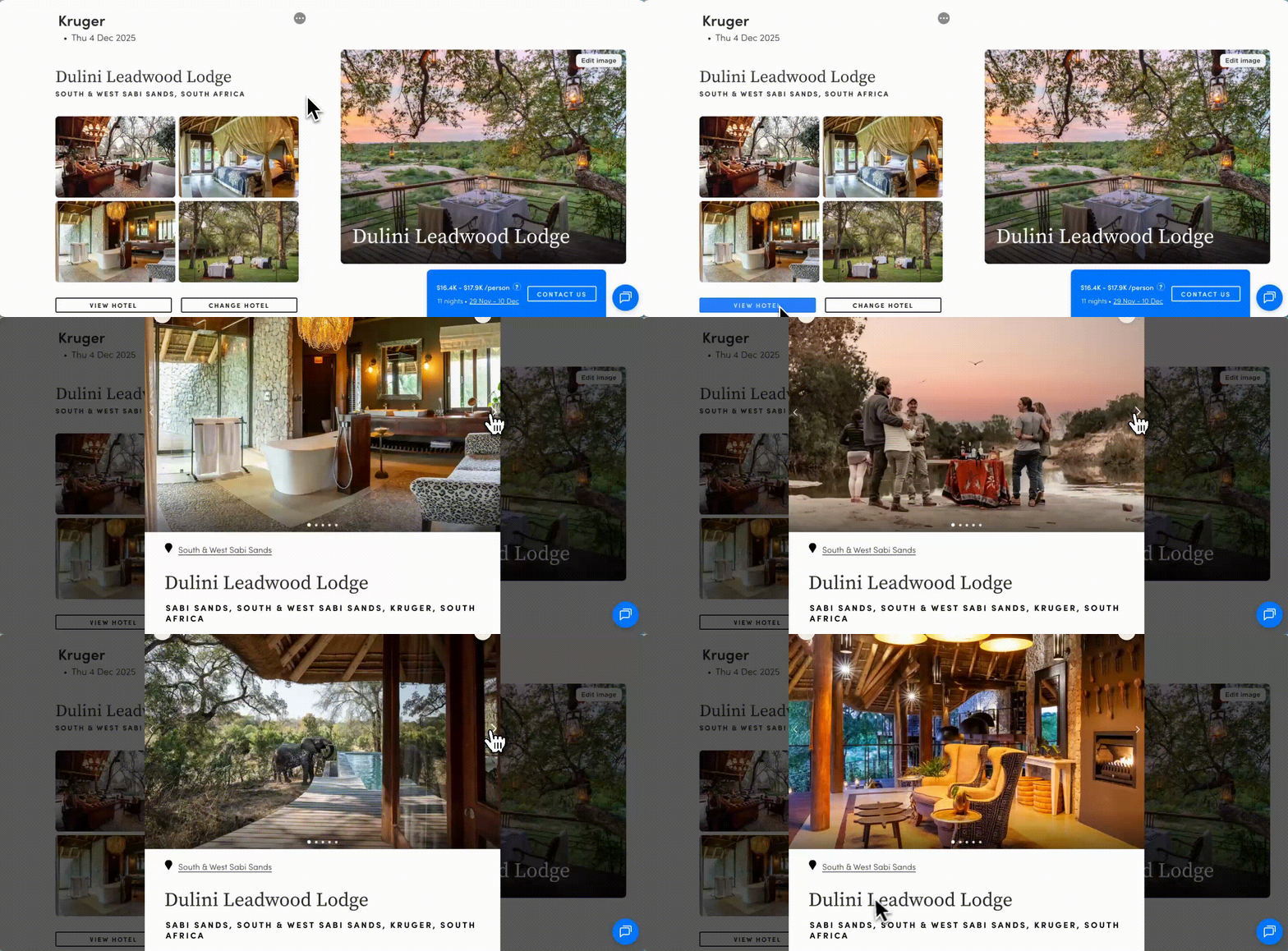
- Showcase optional upgrades for experiences your clients may never have considered: private stargazing setups, dinners under the stars, and even night game drives and wildlife-watching.
- Store a best dark-sky regions list inside your content library for quick recommendations, for example Namibia’s NamibRand Reserve (the only official International DarkSky Reserve in Africa), Lapalala Wilderness (a DarkSky Park) and Chile’s Atacama Desert and Elqui Valley.
- Pair night-sky moments with slow mornings the next day to reassure the clients that it won’t take time out of their itinerary – and they can rest if they need to!
Sustainable & purpose-driven travel with substance
If 2025 introduced the conservation conversation, 2026 is about substance when it comes to purpose-driven travel. Clients are becoming more interested in what actually goes on behind the scenes, but that doesn’t mean to say they don’t want beauty, comfort and ease – they just want to know that the places they stay, the guides they spend time with, and the experiences you recommend are grounded in integrity. Our role as travel specialists is to filter out the performative options and sniff out the ones that feel genuinely authentic.
How can Waybird help?
- Add a short section to your itinerary explaining how you choose partners and experiences (vetted, respectful and locally rooted), to build trust without being preachy.
- Use your content library to store the best impact notes you come across so you can reuse accurate language across proposals. This could include things like what a lodge protects, what a project funds and how a community partnership works in practice.
- Present purpose-led experiences with specific details, like who your clients will meet, what the experience involves, what it supports, and why it matters. Go one step further by naming the experience and avoiding generic labels like “community visit.”
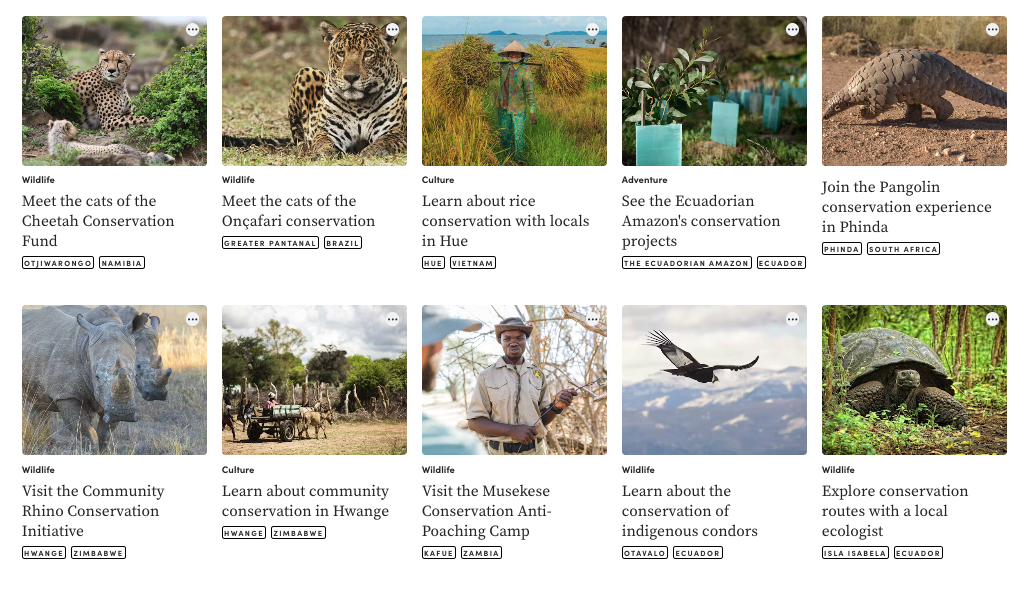
Use your content library to store the best conservation and community based experiences and personalise it with your own in-depth knowledge on these initiatives.
Personalisation and the human touch
It goes without saying that most clients want travel that feels like it has been designed exclusively for them. They’re looking for trips shaped around preferences that are often subtle: how they like to spend a morning, how much structure they enjoy, what kind of energy they want in a place, what they consider worth it and what they actively dislike.
In 2026, the travel specialist’s edge is judgement. Not just knowing what’s good, but knowing what will be right for this client in particular and being able to translate that into an itinerary that reads clearly, looks great and makes decision-making easy.
How can Waybird help?
- Use the itinerary to reflect back what you’ve learned about the client: add small, well-placed notes that show you’ve listened – things like late starts that you have intentionally built in, minimal packing and unpacking, time set aside for photography etc.
- Build two or three variants of the same trip with different pacing, different bases, different accommodation styles so clients can choose a direction without starting from scratch.
- Use the additional content sections to make the itinerary feel curated rather than a template. You could include a short, personal introduction and some notes along the way, detailing why you chose that specific activity or hotel.
What all of these trends have in common is intentionality. Whether it’s choosing the right season, designing for multiple generations, or building in time to stare up at the stars, the trips that stand out in 2026 are the ones that feel genuinely considered. And that’s where your expertise matters most.
The reality is that crafting this level of detail used to take days of back-and-forth, multiple versions, and hours spent formatting proposals that clients might not even open. Waybird gives you the tools to translate what you know about your clients and your destinations into polished, professional itineraries.
